How To Import A Prebuilt Avada Website
Last Update: March 26, 2026
Your purchase of Avada includes access to 112 professionally designed prebuilt websites, with more being added regularly. Each website is ready-made and can be imported with just a few clicks, giving you a significant head start when building your new WordPress website. Each one is carefully designed for a specific purpose—like restaurants, online stores, agencies, coaches, or bloggers—so you can choose a style that already matches the look and layout you want.
Once imported, you can replace the demo text and images with your own, customize colors and fonts, and rearrange anything you like using the Avada Live Visual Builder. It’s the quickest and easiest way to go from a blank canvas to something that looks polished, modern, and fully functional right from the start.
Before Importing Prebuilt Avada Websites
Before you import any of the prebuilt websites, check the requirements list below. All of these are important and will ensure that your website import goes smoothly. In case something does go wrong with your prebuilt website import, please see the troubleshooting section below.
How To Import a Prebuilt Website
Importing prebuilt content will provide layouts, pages, posts, forms, icons, global options, widgets, sidebars, sliders, and other settings required to set up the new website correctly. This process will replicate the live prebuilt site and replace your site’s current global options and widgets.
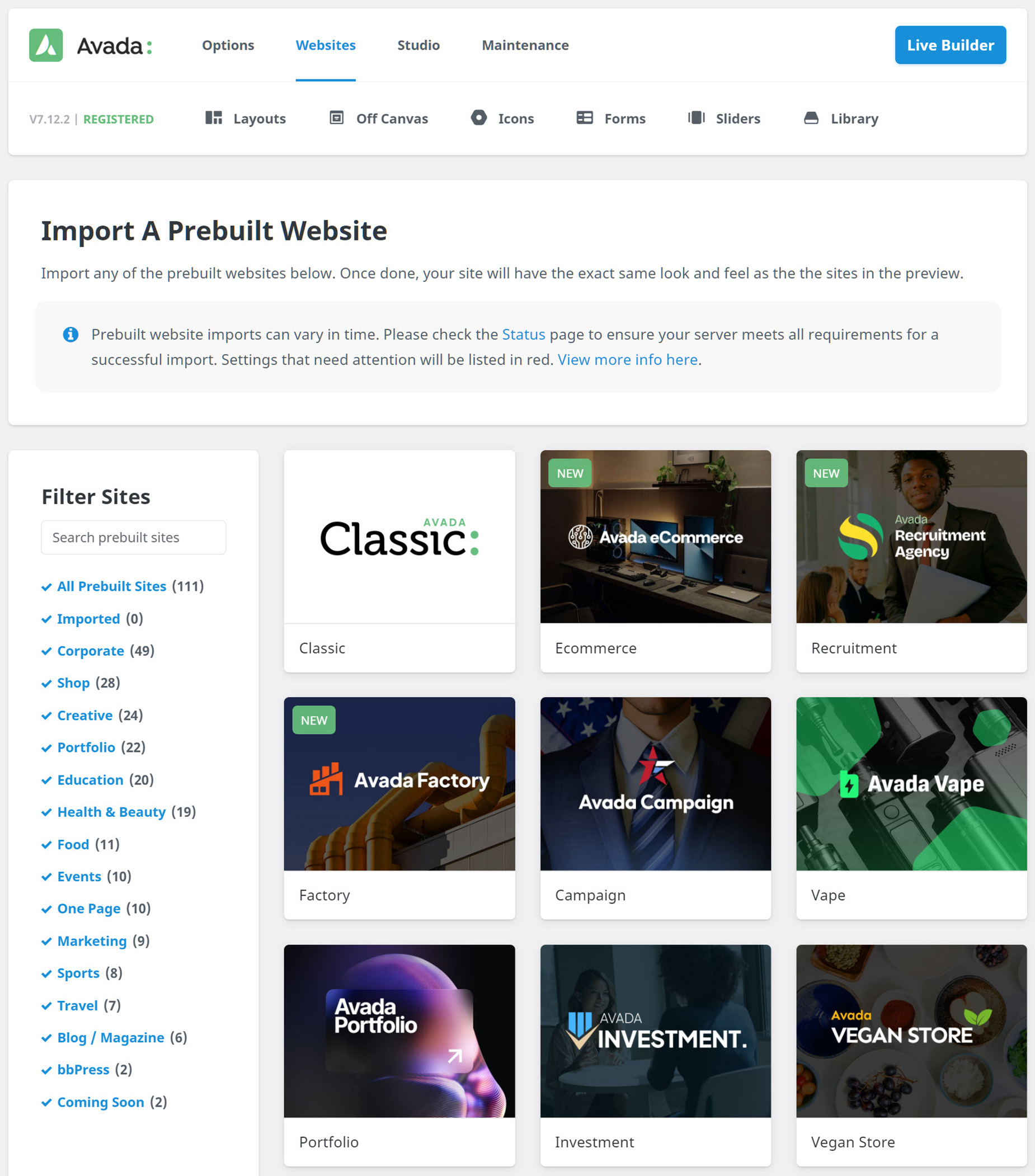
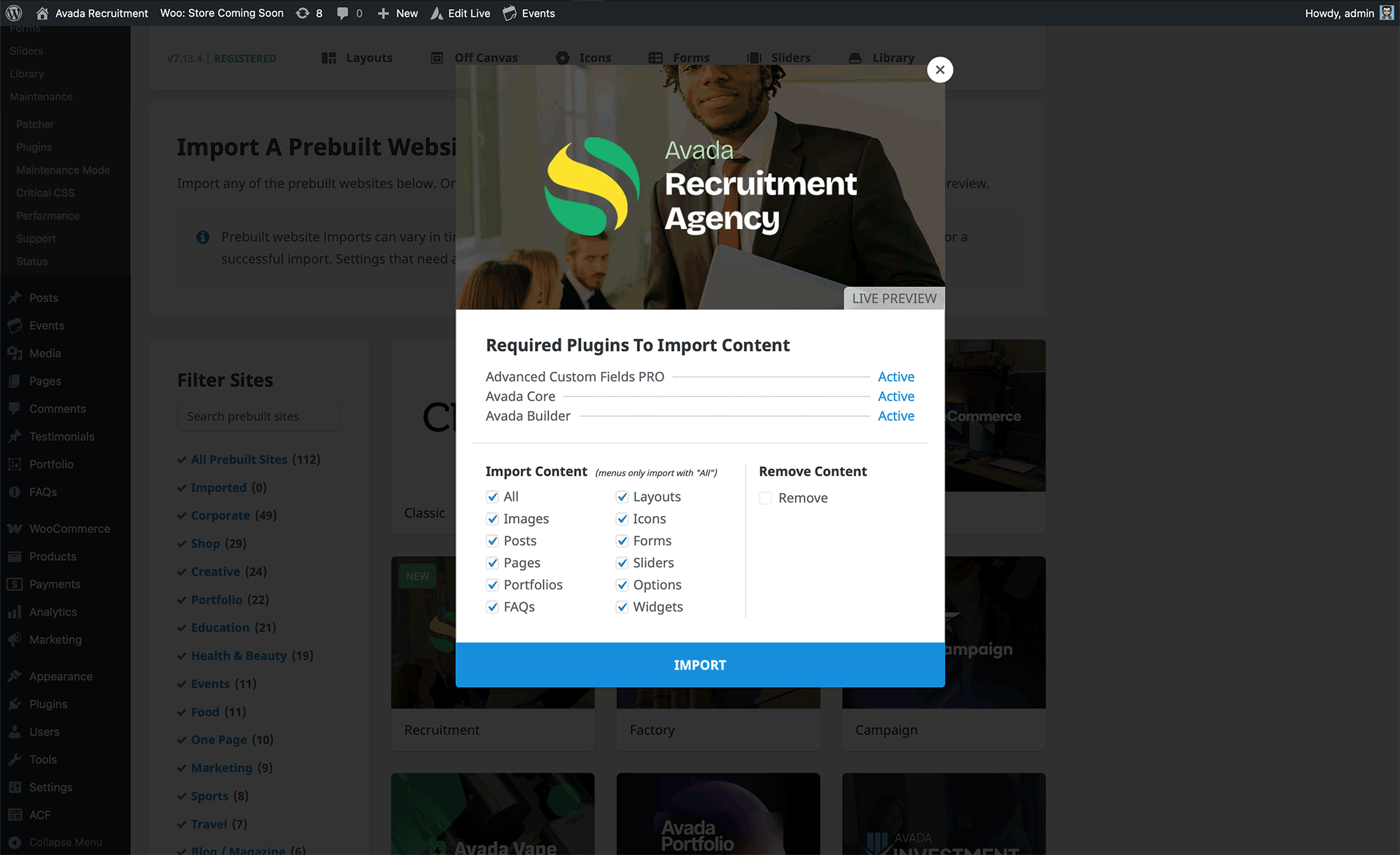
There are two ways to import any one of our prebuilt websites, and for both, you need to register Avada first. The first is to run the Avada Setup Wizard. This runs automatically on new installs, or you can also trigger it through the Status page (Avada > Maintenance > Status). See the How to use The Avada Setup Wizard for more details on that process.
Alternatively, you can use the Prebuilt Website Importer. This can be found at Avada > Websites. Here, you will find all of our prebuilt websites, and you will also find a filter in the left-hand column to help you find exactly the style of website you want.
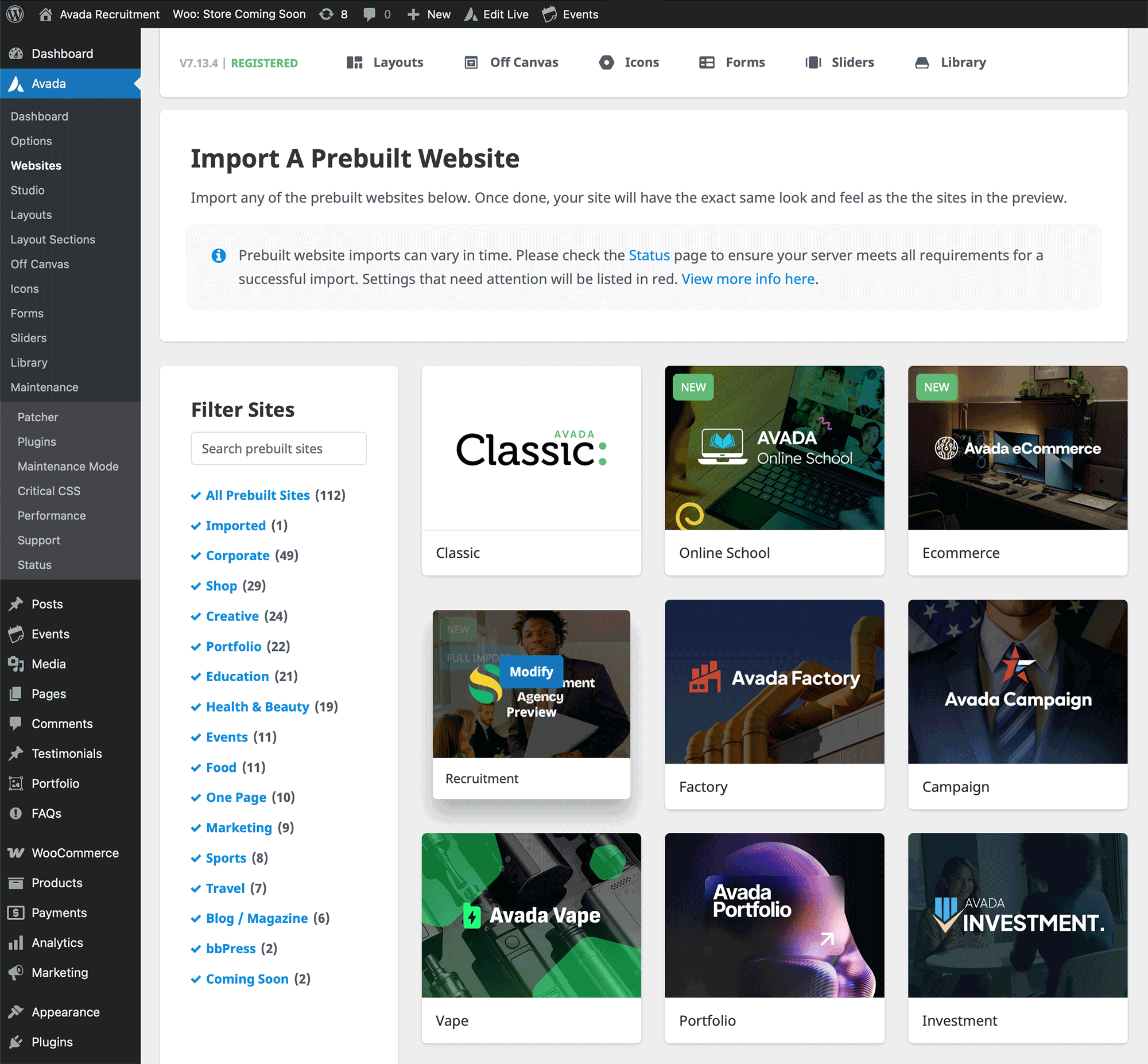
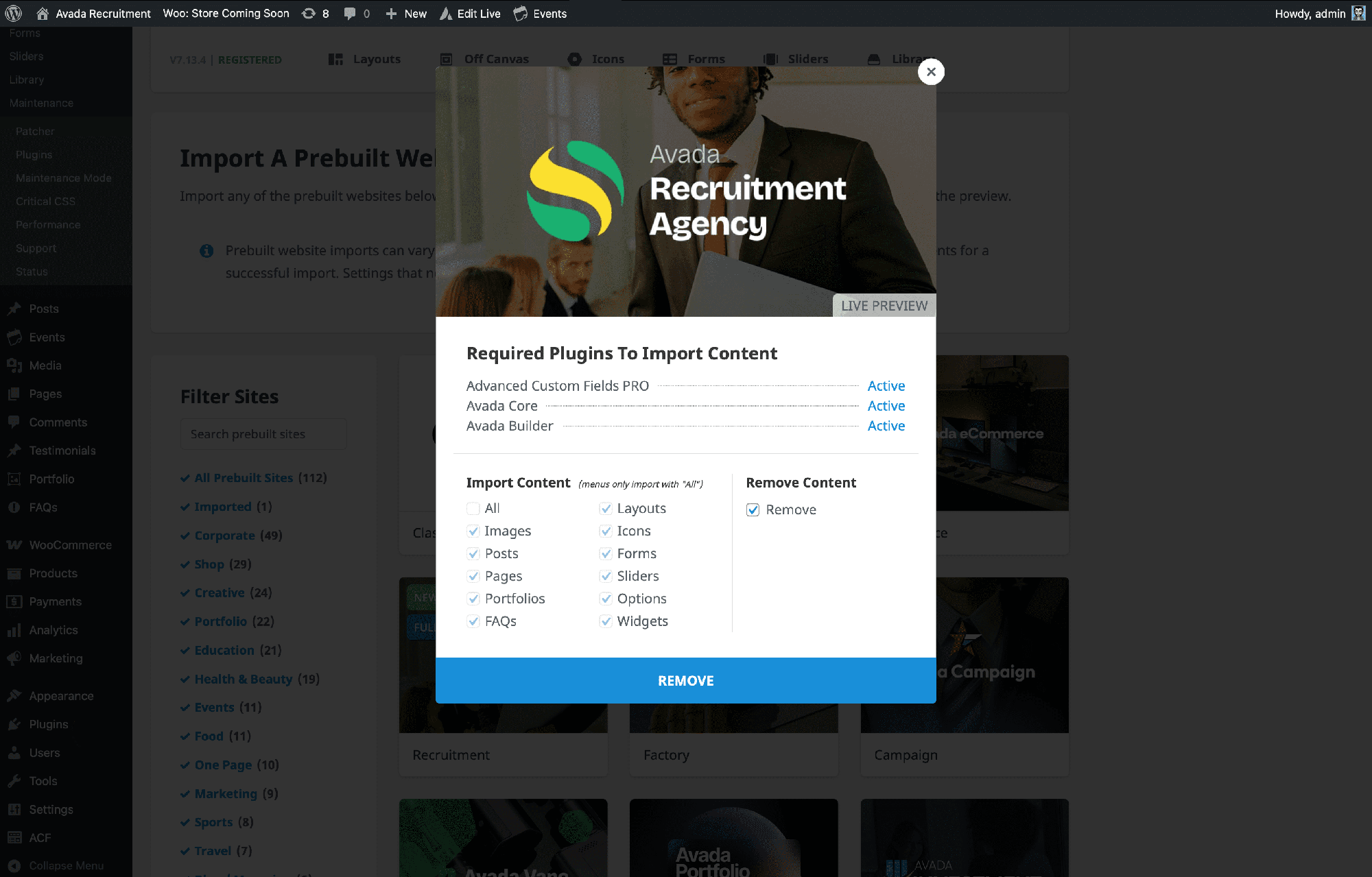
How To Remove An Imported Website
Removing the prebuilt website content will remove ALL previously imported content from the website and restore your site to its state before this prebuilt content was imported.
Troubleshooting
If you encounter errors during or after importing a prebuilt website, please see the possible solutions below. If you don’t find what you’re looking for below, please don’t hesitate to submit a support ticket.
Missing websites on the Websites’ page
If the websites aren’t appearing on the Avada > Websites page, then your Avada purchase may not have been registered. Please register your product before accessing the prebuilt Avada websites.
Slider Alias or ID Not Found For Layer Slider or Slider Revolution
If you already have sliders made, or if something unexpected occurs during import due to low server memory, it’s possible our website sliders won’t be assigned to the pages. You may see an error such as “Slider Revolution Error: Slider with alias Avada_Full_Width not found”, or “LayerSlider cannot be found”.
Each slider is assigned a unique ID in numerical order. If you open a page after importing the content and see an error like that, you only need to edit the page and assign the slider to it. To verify you have the sliders, go to the Layer or Slider Revolution section of your WordPress Dashboard to see if they are listed. If you do not see them, then you can import the sliders separately.
Timeouts and Website import failures
Timeouts are the most common issue, and can be fixed by increasing your system limits, as noted below. With Avada, if your prebuilt import times out, you may see a dialog as shown below. If the import has run long enough to complete a particular step, you can now continue the import by clicking the Continue button.
For best results, though, it’s always best to check your system limits and make sure they are high enough that you don’t run into issues in the first place.
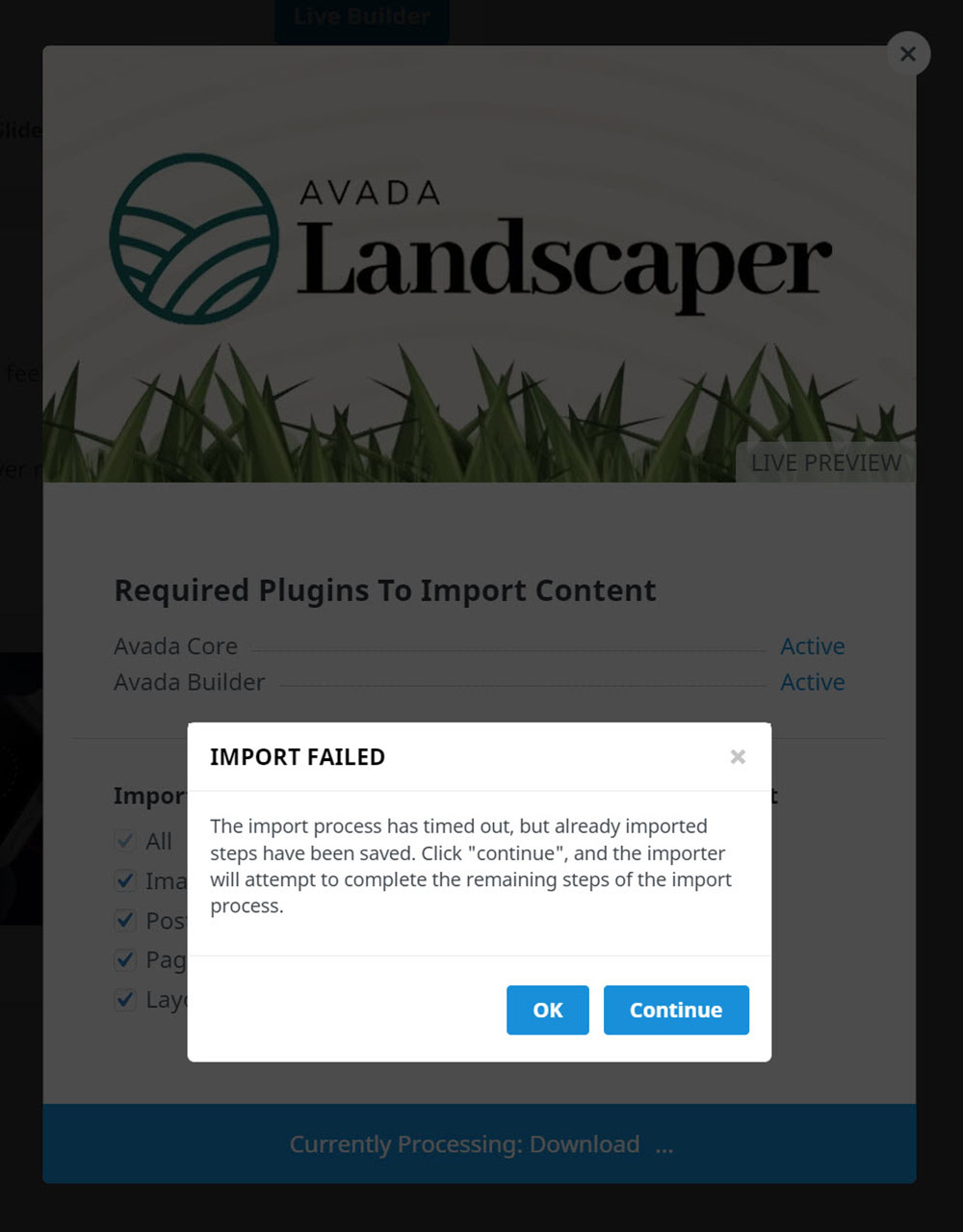
If the website import fails, a pop-up will appear with a notice and info on what may have gone wrong. You’ll find some suggestions of what to check first in that same pop-up. For example: The Website import failed. Please check for PHP limits in red on the System Status page. Change those to the recommended values and try again.
You’ll always want to check your Avada System Status page first to see if there are any red low limits. If you see that, increase them to the recommended limit and then try the import. Generally, your web host can handle increasing low limits for you. More info on changing these specific server limits can be found here. For details on Avada required minimums, please see our post here. You may also find the posts below helpful if you’re experiencing any of the following errors:
Prebuilt Website Content Will Not Import – Alternative Method
If your host will not make changes, or you cannot import the website content, please try the Alternative Prebuilt Website Import method.
Avada Post Cards Not Displaying Content
Sometimes, you might import a website and find that the Avada Post Card Element is not displaying the content from the prebuilt website. Upon import, WordPress assigns IDs in its own way and may not match the IDs we have in the prebuilts.
Thus, for example, categories or tags selected in Post Card Elements might not have unique IDs and won’t display any content. In the Element, you see just an X or Null where a tag or category should be listed. A workaround is to clear the tags or categories and select them again.
The Website Content Is Duplicated
Method 1: WP Reset Plugin – This plugin is the fastest way to get rid of content. However, it will remove all content from your database and leave the default theme activated. It does not remove plugins, but will deactivate them and remove all pages, posts, menus, sliders, widget data, Global Options, etc. It removes all the content from your database. Only do this if you are planning to start your site freshly from a new WordPress install/new website import. Download the WP Database Reset plugin.
Method 2: Manual Removal – This method will take longer and simply involves manually removing duplicate items. For example, go to the Appearance > Menu and delete any duplicate items one by one. It will be the same process for pages, post, sliders, images etc.
Prebuilt Website Blog Posts Show Up In Your Blog Feed
Most Avada prebuilt websites include published blog posts. If you import on a live site, plugins like Jetpack will detect new posts and push them to your blog feed. Please disable any plugin that may do that before you import. After the import, you can remove the posts or save them as drafts, then turn your plugin back on.