Share
As of 2026, artificial intelligence (AI) is playing a significant role in shaping the future of online content marketing. As a workflow tool, it helps content marketers write content, generate ideas, summarise research, and speed up workflows that used to take time to complete, now completed in a fraction of the time. But as AI becomes more capable, new terms start to appear — and few cause more confusion than GPT Models (Generative Pre-trained Transformer) and AI agents.
They’re often mentioned together, sometimes even interchangeably, but they are not quite the same thing. Understanding the difference is important if you want to use AI effectively, without overestimating what it can do or missing out on what’s coming next.
In a previous article, we examined the impact of AI on website content, design, and SEO. This article breaks down the distinction in plain language, from a marketing perspective, with no technical background required. This article breaks down the distinction in plain language, from a marketing perspective, with no technical background required.
Overview
AI Agent vs. GPT Model: Know The Difference
Understanding the difference between GPT models and AI agents is important
to understand. The two are essentially related but are not the same thing because they perform very different tasks.
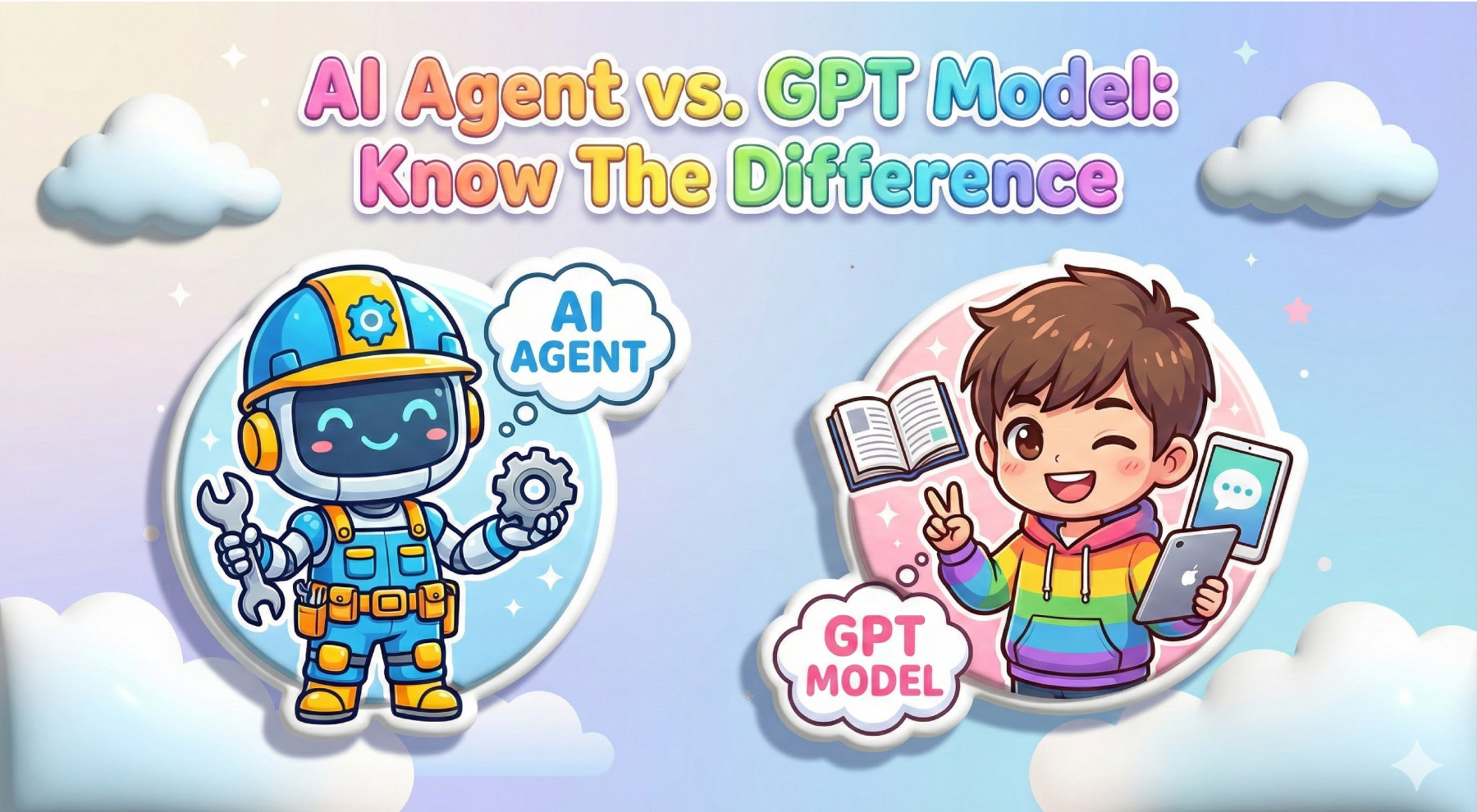
They often work together, but as illustrated above, they play very different roles. If you weren’t aware of the differences, you might expect a writing tool to manage processes or overlook agent-based tools that could save significant time and effort. Knowing which is which helps you use AI more effectively, select the right tool for the job, and genuinely add value to your workflow.
Why AI Agents Are a Natural Evolution From GPT
For many teams, GPT is their first real experience with AI. It delivers quick wins, speeds up writing, and makes content production easier almost instantly. But over time, teams realise they are still repeating prompts, manually tracking updates, and reacting to issues after they appear. GPT helps with execution, but it doesn’t manage the surrounding workflow.
AI agents emerge as the natural next step. They don’t replace GPT — they build on it. If GPT generates the language, AI agents decide when and where that capability should be applied, helping teams move from reactive content creation to more structured, goal-driven workflows.
What Changes for Marketing Teams?
Making the shift from GPTs to using Agents to enhance your workflow does not remove the need for human control and oversight. In fact, it makes human input more valuable.
As Agents are created to handle more of the operational workload, content marketers will move further upstream. Their role shifts from producing every asset to setting the direction for marketing projects, defining the threshold of success, and ultimately shaping the brand. AI simply removes the repetitive work that distracts from fulfilling these responsibilities.
Summary
This article focuses on how the differences between AI GPTs and AI Agents manifest in real marketing work, as a natural progression from writing prompts (GPTs) to outcome-driven tasks (Agents).
And as AI continues to mature, that distinction will only become more relevant — especially for teams focused on scale, consistency, speed, efficiency, and long-term content performance.